.png)
Advanced Therapy
- Krzys Klinowski
- Aug 23, 2021
- 3 min read

More than 26 million UK residents seek therapy care from an Advanced Massage Therapist each year. These highly trained professionals specialise in the alignment, postural movement and health of the musculoskeletal system. Advanced Massage Therapist care has been shown to help many common health conditions and chronic issues. Here are a few types of advanced massage therapist care techniques that I am commonly used in my therapy sessions so that you become familiar with the terminology that you might hear during your visit.

SPINAL MANIPULATION
Spinal manipulation (also called thrust, adjustment) is one of the most common advanced care techniques used by an advanced massage therapist, chiropractors, osteopaths and physios. The technique involves passive mechanical movement directed at a specific spinal joint or joint segment in order to restore movement or reduce pain. It is an HVLA, high-velocity, low-amplitude manoeuvre (thrust, adjustment) performed at the end of the patient's spinal range which usually causing a popping sound. The popping sounds are gasses trapped between your joints in the synovial fluid. Spinal manipulation is successfully used to treat many conditions including sciatica, low back pain, headaches, neck pain, mobility issues.
Theories for pain relief following spinal adjustments include a mechanical/reflexive relaxation of soft tissue, a movement of a disc bulge away from a pain-sensitive structure, or a proprioceptive input to the spinal cord to gate out pain.

SPINAL AND JOINT ARTICULATION
The word articulation originates from the Latin meaning ‘jointed’ or ‘divided into joints’. Osteopathic Articulation is the cornerstone of most manual therapies, including osteopathy, physiotherapy, chiropractic, sports therapy and massage therapy.
Articulation uses a low amplitude (short distance) and low to moderate velocity (speed) of movement within the patient's pain-free range of motion while in dysfunction. This aids the bodies natural lubricating system (synovial fluid) to embalm the joint which increased range of motion, decreased pain or both (ideally).
Articulation techniques have been shown to help relieve pain and increase the range of motion in joints.
Osteopathic Articulation has been shown to be effective for:
– Musculoskeletal Pain
– Decreased Range of Motion (ROM)
– Osteo Arthritic Joint Changes
– Hypertonic Muscles
– Increase ROM
– Improve Quality of Movement
– Decrease Recovery Time
– Decrease Pain Levels
– And More
Treatment areas using Osteopathic Articulation
Cervical
Thoracic
Lumbar
Upper and Lower Extremities
Active and Passive techniques

DRY NEEDLING
Medical Acupuncture (Dry Needling) involves inserting fine needles for a therapeutic effect. Overall, it is an adaptation of the Chinese method just using modern up-to-date knowledge of anatomy and physiology. Medical Acupuncturists no longer conform to the notion of Ying and Yang. However, we do aim to create homeostasis within the body. By treating a musculoskeletal system by targeting a trigger point and belly of the muscles to relieve pain, realise the muscle tightness and increase range of motion in joints.
MYOFASCIAL RELEASE
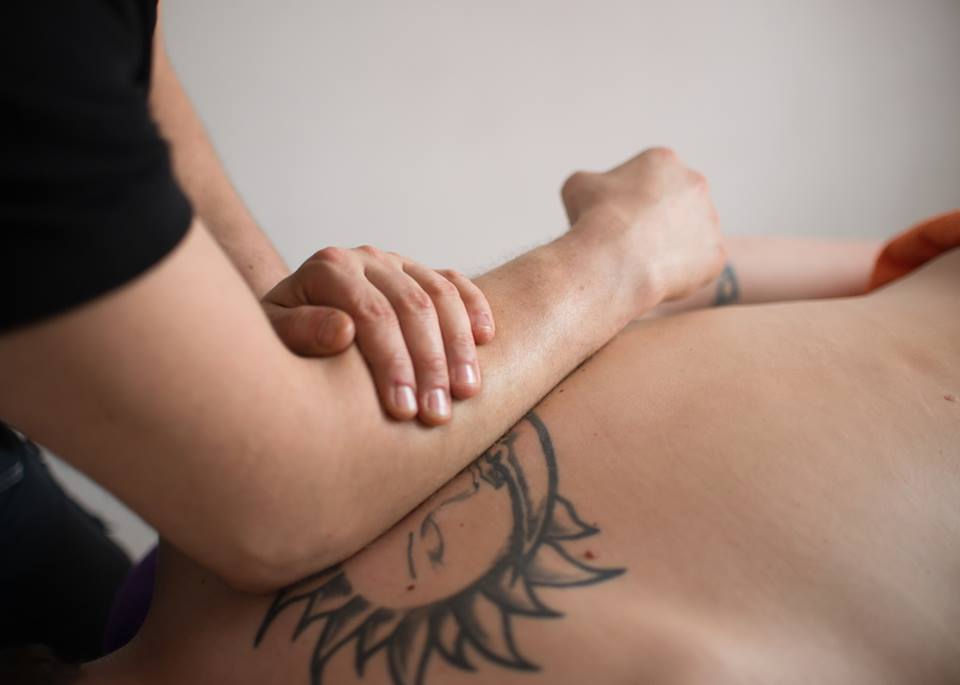
Myofascial release is another common treatment method I use in my treatments but with specific attention paid to the movement and fascia of the body. It is more like massage a very gentle and slow than it is like other thrusting methods mention above, and requires an expert to apply gentle and constant pressure to problematic muscles in specific areas of the body. It is widely accepted that this treatment method is effective at reducing pain caused by contracted muscles, improving lymphatic circulation, and promoting tissue healing within damaged muscles by improving blood flow.
How can I arrange a sports massage?
The easiest way to arrange a sports massage with us at Move Free Pontypool Therapy is to email us at MoveFreePontypool@gmail.com or call us on 07922278249.
Alternatively, if you have any questions please feel free to contact us.

Comments